
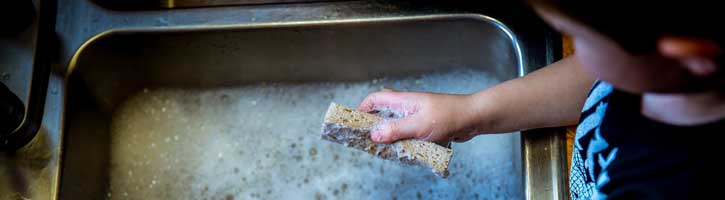
Many parents wonder if they should reward their child after they complete a task or chore. They think, “When I do chores, nobody rewards me.” They claim, “Hey, our lives are built around responsibilities, and nobody rewards us for maintaining them.” Let’s step aside for a moment and see if there really are no rewards for the tasks and chores you perform as an adult.
Let’s consider some examples such as loading the dishwasher or brushing teeth. What will happen if you don’t load the dishwasher? Eventually, you won’t have any clean dishes to use. On the other hand, if you load and run it, you’ll have clean dishes ready to use when you need them. It’s not the case that there is no reward. The reward is having clean dishes available to use. Now let’s consider brushing your teeth. What will happen if you stop brushing your teeth? You’ll probably get cavities, which can be expensive to treat, and bad breath which will likely affect your health and personal relationships adversely. However, if you brush your teeth, you’ll have fresh breath, clean-feeling teeth and good oral health. These are rewards for the act of brushing your teeth. Do you see my point? Many tasks and chores that you perform have natural rewards that reinforce your desire to keep performing them.
Before our child learns to see the natural rewards, we should help him by providing rewards that are meaningful to him. When you are trying to teach your child a new skill, you can help him receive positive reinforcement by using rewards that he values. For instance, if your child likes movies, you could suggest that the whole family can enjoy a movie night after they load the dishwasher 10 times. Help your child meet the goal. It’s okay to perform the task together the first few times. Encourage the child by recognizing his cooperation and progress made toward reaching the final goal. Each morning, thank your child for the wonderful job he is doing, and highlight the fact that the whole family is enjoying clean dishes thanks to their effort. Eventually, by acknowledging and rewarding progress toward the new skill, your child will receive the reinforcement that will help this behavior become a new habit.
 |
Victoria Tenenbaum is a certified Behavior Analyst, BCaBA. She holds a bachelor’s degree in education from Tel Aviv University and currently working toward master’s degree in applied behavior analysis. Victoria specializes in training parents to address children’s problem behaviors by implementing a scientific approach to correcting a child’s sleep or behavior problems. Victoria is a mother of 2 very active boys and is a pediatric behavior consultant for Habitz. www.victoriatenenbaum.com |